Welcome to Kuvempu University.

Accredited by NAAC With "A" Grade   Kannada
About Library

Our Kuvempu University Inspires You More.

The University Library came into existence with the establishment of the Kuvempu University on June 29, 1987. Till then it was functioning as a Post-Graduate Centre Library under the control of University of Mysore and the library resources were housed in a temporary building at B.R.Project. In the year 1988, the library was shifted to the academic building on Jnana Sahyadri campus. Finally University library was shifted to its own newly constructed modular independent building in the year 2003. In the midst of its excellent setup of academic activities, the library acts as a nerve centre catering to the academic and research needs of the students, the researchers and the faculty members of post-graduate departments, covering Science,Social Science, and Humanities, engaged in higher pursuit of knowledge. Kuvempu University Library has been shaped as a centre of excellence, for academic and research pursuits by keeping itself open to the changes brought in by information and communication technologies.

Objectives
  • To build up a comprehensive and upto date collection of books, reports, scientific journals and other non-book material in the disciplines taught and researched in the University.
  • To organise the conventional and non conventional information sources in a systematic manner, in order to provide an efficient and prompt service to the clientele.
  • To disseminate information by issuing documentation lists and other current awareness services for the benefit of teachers and researchers to keep them updated/abreast with the latest developments in their areas of interest.
  • To provide other services such as compilation of current and retrospective bibliographies, procurement of photocopies, preprints, reprints and other reference services.
  • To enter into an arena of Information Technology using computer applications for quick and speedy information storage and retrieval.
  • To join the resource sharing activities of INFLIBNET of U.G.C.
  • To extend help and co-operation to the college libraries, affiliated to Kuvempu University, in the process of modernisation of their library services.
  • To serve as a nucleus of information in all the disciplines.

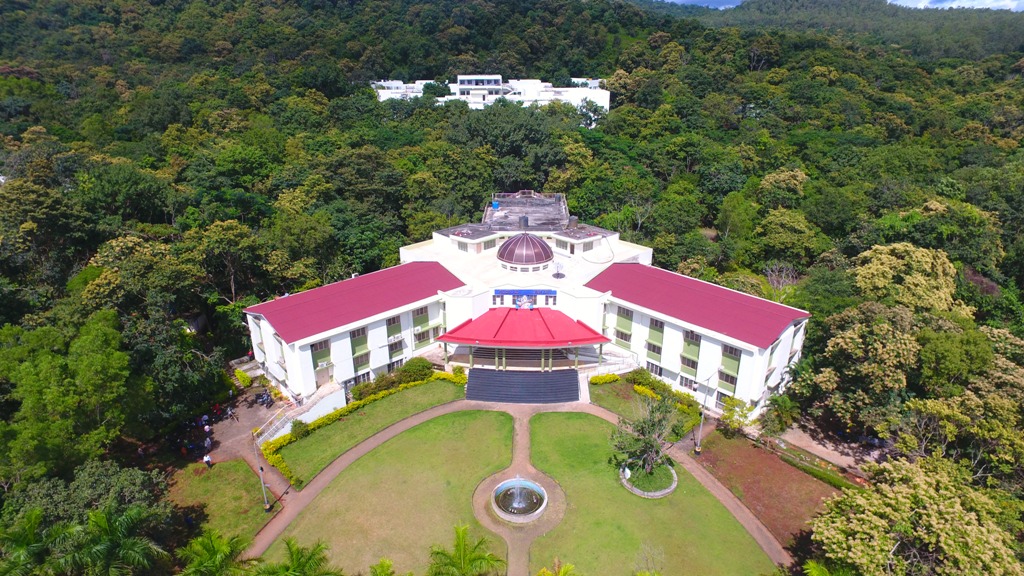
Kuvempu University is a confluence of the local and the global; of the regional and the pan-Indian; of the sustenance provided by tradition and the dynamism provided by modernity; of a deep sense of commitment to the socially and culturally disadvantaged and an equally deep commitment to excellence. The emblem of the university has a mythical animal with the trunk of an elephant and the body of a swan. This mythical animal, called Gajahamsa is commonly found in the Vijayanagara and the Keladi sculpture and temple art. It symbolizes the integration of knowledge and wealth. The jurisdiction of the university spreads over the districts of Shivamogga and Chikkamagaluru. It is a university with a distinctive academic profile, blending in itself commitment to rural ethos in modern spirit. The university offers under-graduate, post- graduate and Ph.D programmes in a wide range of disciplines. It has 35 Post-graduate Departments in the Faculties of Arts, Commerce, Education, and Science and Technology. The University has its headquarters at Jnana Sahyadri campus. It sprawls over an area of 230 acres of a lush green, picturesque locale providing the right ambience for higher education. The main buildings of the university have been constructed on small hillocks, thus blending naturally with the landscape. The entire campus area is free from any form of pollution. The undisturbed and pleasant atmosphere on the campus makes it ideally suited for the pursuit of higher education and research.

Book Collection

At the time of the establishment of the University in 1987, the library had a collection 15161 books. The collection of the library has grown up considerably cover literature of various aspects of science, social science and humanities. At present the library has a collection of 1,32,000 books, 120 periodicals, 6,800 back volumes of periodicals, 4,000 theses. The library has additional collection of 10,000 books for SC/ST students and 4,000 for OBC students. All the students, the researchers, the faculty members and the employees of the University are eligible for the membership of the Library. The registered members are issued Borrower's Ticket corresponding to their entitlement. Kuvempu University Library is initiated in issuing bar-coded library identity cards for all its members. The entitlement, in terms of the number of books that can be borrowed by the members, are as follows

Category of Members No. of Tickets issued
Professors 15
Associate Professors 15
Assistant Professors 02
Guest Lectures 10
Research/M.Phil Students 05
Students 02
Non Teaching Staff 02
Library Collections

t the time of the establishment of the University in 1987, the library had a collection 15161 books. The collection of the library has grown up considerably within a span of nineteen years covering literature of various aspects of science, social science and humanities. The library collection includes following types/numbers of documents as on September, 2017

Collections Details
Books (Including SC/ST and OBC Library) 1,46,000
Theses and Dissertations 4,000
Current Journals 120
e-Journals 13,000
Back volumes of Journals 6,800
CDs/DVDs 1985
Magazines 40
Floppy Disk's 88
Audio Cassettes 03
Reports 972
Atlas and Maps 01
Newspapers 12

Usually the Library remains open from 9 AM to 9 PM on all working days whereas it functions from 9 AM to 2 P.M. on second Saturdays and Sundays. However, there will be changes in the schedule depending upon the need.

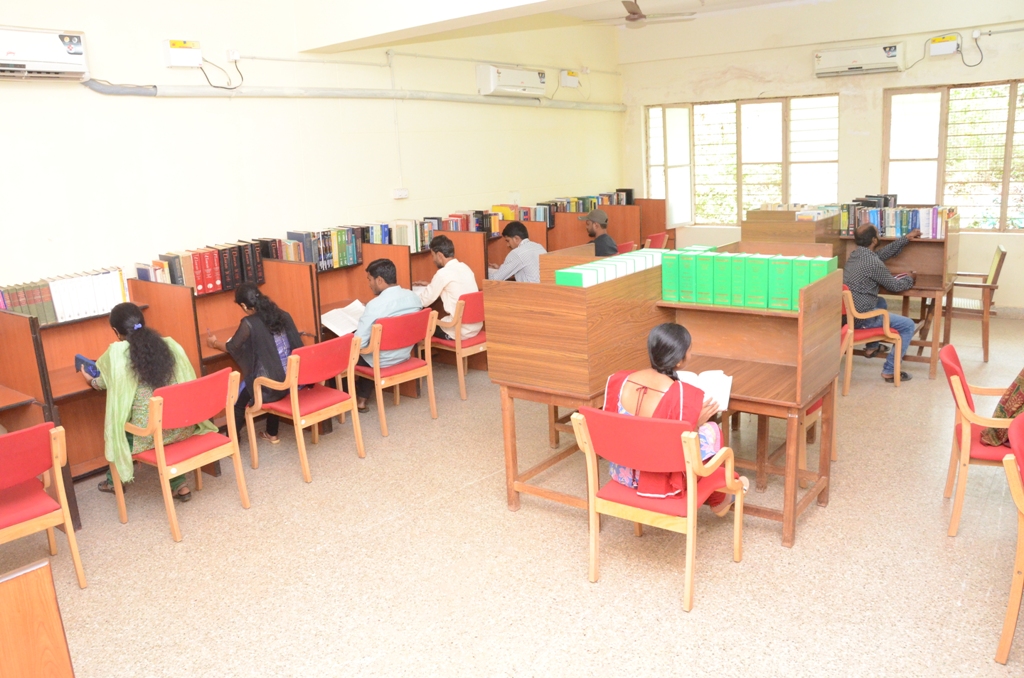
The greatest advantage that a Library can offer to its readers is its open access or open shelf system. This system enables the users to have direct and easy access to the book collection providing good opportunity and freedom to examine and browse the books. It encourages the users to develop a closer acquaintance with the diversity of information sources available in the Library. Keeping this in mind, the Library is practicing Open Access System.

The users are eligible to borrow books against identity card/borrower's ticket for a period of 15 days. The books kept in reference section and the periodicals normally will not be issued. However under certain conditions the reference textbooks are issued to the faculty for overnight reference and return. Those who fail to return/renew the books within a specified due date will be levied an overdue charge of Rs. One per book per day.

Some selected titles of new books acquired by the Library are displayed in 'New Arrivals' racks for the benefit of users. These books will be on display for at least one week and after that they will be made available to borrow.

Books on special occasions such as Independence Day, Gandhi Jayanthi, Dr. B.R.Amedkar Jayanthi etc., are selected and displayed in the library.

The books written by and on Kuvempu are displayed in the Library.

It is not possible for any institution, however rich its resources, to buy all the books published even in a discipline. Hence, it is inevitable to depend on other organisations to share information sources for the mutual benefit of users. Books not available in Kuvempu University Library but required by faculty members and research scholars will be procured from other university libraries on inter-Library loan. The INFLIBNET's database on Internet is used for the location of the university library where the book in demand is available.

Newspaper clipping service is one of the most important service in a Library. This service is one of the most important service in a Library. The press clipping means the screening, scanning/cutting of news items etc., daily from newspapers in an organisation and sending them via e-mail to officials, decision-makers, teachers etc., who will find them useful. Kuvempu University Library has also undertaken such service. Library staff will browse the Leading National Newspapers and scan the news items in relation to the higher education are scanned and clipped in the form of pdf files. These files are sent to the University officers, teachers regularly and to other administrative staff of the University on demand, and finally these are uploaded in institutional repository of Kuvempu University(kuls-ir.kuvempu.ac.in).

In ready reference service Library staff will answer the users queries with the help of dictionaries, encyclopaedias, yearbooks, etc., which are more or less fact-finding questions. On the other hand Library staff also undertake long range service for the benefit of the users community. In this service, Library will offer the users the list of books on a given subject on demand.

Online Public Access Catalogue (OPAC) facility has been provided for the benefit of the users to access databases of books, theses, dissertations and serials of our university collection. Proper training is also provided to the students, about the use of OPAC system, in the begining of the academic year.

With the financial assistance extended by the UGC under Inflibnet's Shodhganga project the University Library has established its own ETD Lab and created an Institutional Repository (kuls-ir.kuvempu.ac.in). This Repository contains databases of theses, dissertations, newspaper clipping service. Further, the library intends to include research articles of staff of the University, reports and other scholarly contents in the Repository.
Library Rules
  • Only registered members are allowed to use the Library.
  • Registered members are issued a Library membership identity card.
  • Members should produce their ID cards at the entrance of the Library.
  • Readers should observe strict silence and switch off their Mobile phones in the Library premises
  • Borrower's tickets/Library membership ID cards issued by the library are non-transferable.
  • Books are normally issued for a fortnight.
  • Reference books and periodicals are not issued out.
  • Borrowers must satisfy themselves with the physical condition of books before borrowing.
  • Members are responsible for books issued against their tickets.
  • Issued books returned after due date attract overdue charges.
  • Readers are not allowed to bring personal books or any printed material and other personal belongings like bags, umbrellas, etc. inside the Library. These materials are to be kept at the Property Counter at their own risk.
  • Readers are advised not to leave their precious and valuable items like money, passport, credit card etc. at the Property Counter.
  • Readers should not write in, mark or otherwise disfigure/damage books, furniture, etc.
  • Library can recall any issued book even before the due date.
Library Publications

International Classification Scheme (DDC) will not support root level classification of collection of local languages like Kannada, Tamil, Telugu, and other Indian languages. Because each region, locality having their own culture and creeds. The collection or sources of this type should be in a systematic order through proper classification for the benefit of the users depending upon source types. In this direction this publication helps in effective classification of collections of Kannada Language books. For this purpose the Kuvempu University Library has prepared and published this publication with regular updation based on necessary additions and changes wherever required for systematic and effective classification of Kannada books collections.

The Latest Additions publication is the quarterly list of the new books added to the University Library. The entries in the text are arranged in Classified Subject order. The Author index of the text is appended at the end.The entry consists of Author, Title, Edition statement, Place of Publication, Name of the Publisher, Year of Publication, Physical Descriptions, Series Name and Number, ISBN Number, Call Number, and Accession Number of the book. This publication would be of immense help to the Faculty Members, Research Scholars, Students and also others who wish to keep aware of incoming books to the University Library.

The publication entitled "Catalogue of Serials" is the frequently revised and updated catalogue of periodicals of Kuvempu University Library. Main objective of this catalogue is to provide up-to-date information to the users on the periodicals resources in the Kuvempu University Library. This periodicals holdings list provides information about each periodical title, periodicity, continuity of the periodical, incomplete volumes, missing issues etc. The entries arranged in the alphabetical sequence of the title. The users will find this catalouge helpful in using the periodical resources available at Kuvempu University Library to meet their information needs. This list is also made available on Internet through INFLIBNET Union Catalogue at www.inflibnet.ac.in for effective resource sharing.
Training Programmes

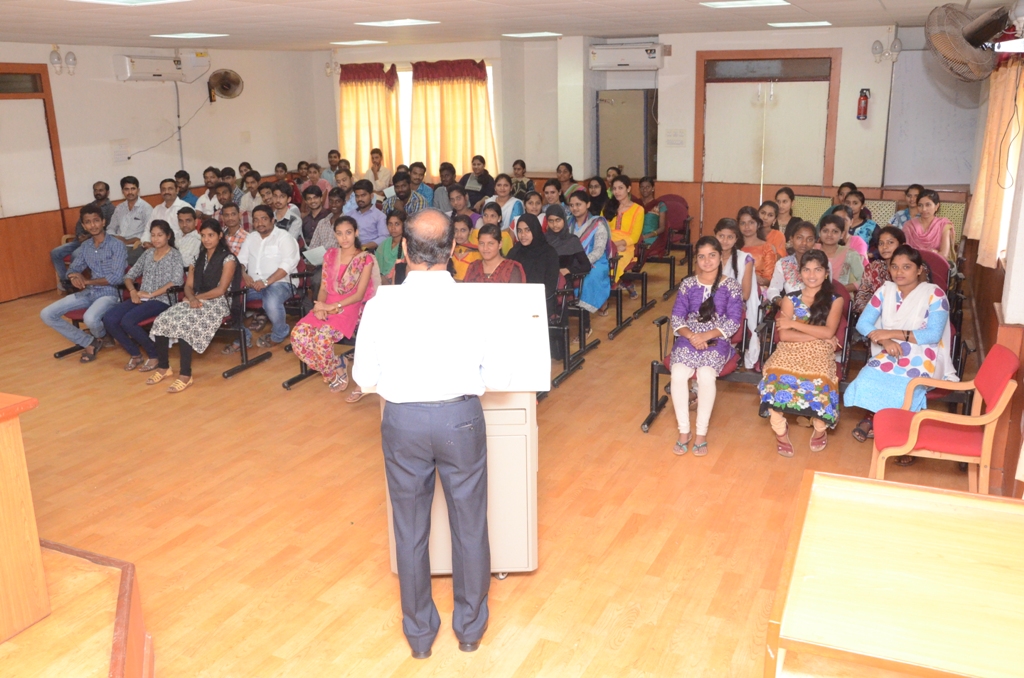
The freshers particularly students newly admitted to post-graduate courses of the University, are formally introduced to the Library sources and services at the beginning of every academic year. The students are invited (department-wise) to the library and taken to each section by the Library staff and are introduced to the diverse sources and services so as to make them familiar with the library to gain maximum use of the Library. This will help them to have acquaintance with the library resources and ICT tools and techniques used for usage of resources

Under e-ShodhSindhu (formerly UGC-Infonet E-Consortia Programme) Kuvempu University Library has been availing more than 15,000 core and peer-reviewed journals and a number of bibliographic, citation and factual databases in different disciplines. For effective usage of these e-resources by academic community, the Library has been frequently arranging e-resources awareness and training programmes by inviting resource persons from concerned service providers and experts in the field.

The University Library has been providing training to the candidates those passed Library Science courses viz., Diploma in Library Science and , B.L.I.Sc. The selection of candidates from the above courses is with appropriate proportion. For this, the University has been availing financial and other assistance from the Apprenticeship Board, Govt. of India.

Rankings & Accreditations